
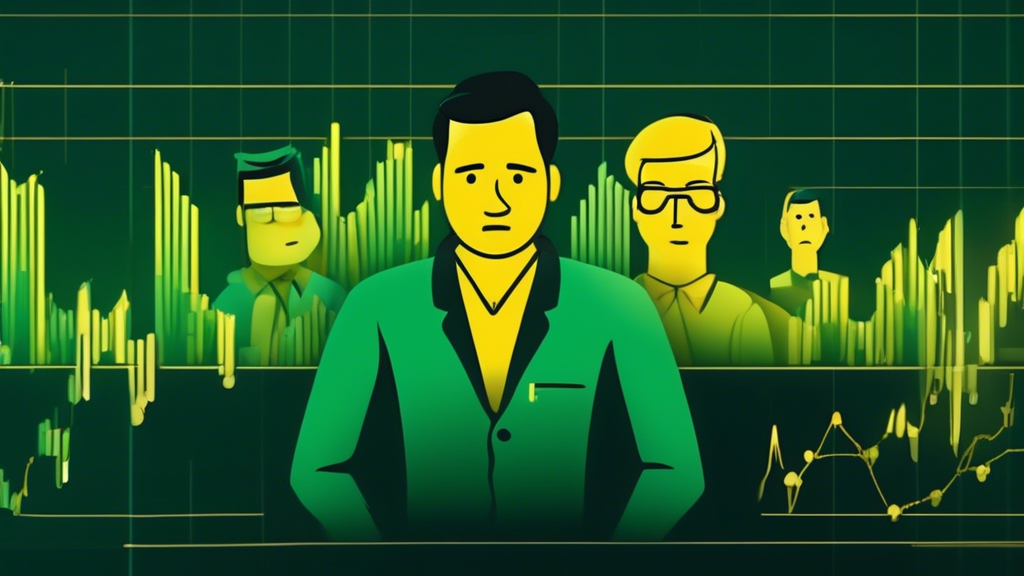
Trading in financial markets can be both exhilarating and daunting. Traders often face a rollercoaster of emotions, particularly when dealing with losses. Losses, although an intrinsic aspect of trading, can significantly impact a trader’s psychology and decision-making abilities. Understanding the stages of these emotional responses is crucial for developing resilience and improving long-term performance in trading. The model of the four stages of loss in trading mirrors the well-known framework of grief processing and helps traders to better manage their emotions.
Stage 1: Denial
Denial is the initial reaction to a loss on a trade. During this stage, traders might refuse to believe that the trade went against them or might hope that the market will turn back in their favor without any rational basis for this belief. It’s a defense mechanism used to buffer the immediate shock of the loss. Traders in denial may avoid looking at their account or market data, or continue to hold a losing position instead of cutting losses early. Recognizing this phase can prevent traders from additional losses and encourage more rational decision-making processes.
Stage 2: Anger
Once the realization kicks in that the loss is real and not reversible, traders may experience anger. This could be directed towards oneself, market conditions, a trading advisor, or even the trading instruments. Anger can manifest as frustration, irritability, or even aggression. While it’s a natural emotional response, staying in this stage can impair the ability to think clearly and make strategic trading decisions. Managing this anger through various means, such as physical exercise or discussing these feelings with a mentor, can be beneficial.
Stage 3: Bargaining
The third stage involves bargaining. This might include traders promising themselves or a higher power to follow their trading strategy more closely if only they can recover their lost funds. Bargaining is often accompanied by making rash decisions in an attempt to quickly recoup losses, such as doubling down on a losing position or deviating from planned trading strategies. Awareness of this stage is vital as it can help in maintaining discipline and sticking to a trading plan.
Stage 4: Acceptance
Acceptance is the final stage in the process of dealing with loss in trading. In this stage, traders accept their loss and understand that losses are a part of the trading business. It enables them to dispassionately analyze the trade to understand what went wrong and how similar mistakes can be avoided in the future. Acceptance leads to learning and growth, helping build more robust trading tactics. Emotional detachment at this stage also facilitates a more scientific approach to trading, relying more on data and planned strategies rather than impulses.
In conclusion, the journey through the four stages of loss — denial, anger, bargaining, and acceptance — is important for any trader’s psychological resilience and operational efficiency. Understanding and navigating these stages effectively enables traders to maintain their comotion, learn from their experiences, and optimize their strategies. As traders work through these stages, they forge a mindset that can handle the ups and downs of trading much more proficiently, leading to potentially better performance and satisfaction in their trading careers.